
Our Products
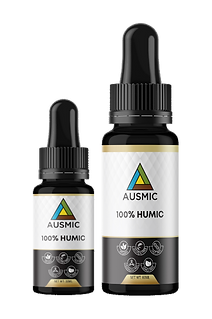
Fulvic & Humic - Science-Backed Bioactive Powerhouses
Fulvic and Humic are natural organic compounds formed from the slow decomposition of ancient plant matter, now recognised as some of nature’s most versatile and wellness-supporting molecules.
Fulvic is ultra-small, fully water-soluble, and penetrates deeply into cells and tissues, acting as a system-wide antioxidant, metabolism booster, and enhancer of nutrient absorption.1
Humic possesses a larger, more complex structure than Fulvic, that excels at binding toxins, supporting the gut barrier, and providing long-lasting protection for cells and tissues.2
Both Fulvic and Humic are:
-
Powerful antioxidants that neutralise free radicals and protect against oxidative damage.1,3
-
Proven anti-inflammatories that regulate immune responses, help calm chronic inflammation, and support joint, metabolic, and neurological health.4,5,6
-
Potent modulators of the microbiome and intestinal barrier, fostering digestive health and overall systemic balance.7,8
-
Effective agents for detoxification, binding heavy metals and man-made toxins for safe removal from the body.9,10
-
Positive influences on skin resilience, healing, and elasticity, both from inside and out.11,12,13,14
Supported By Recent Science: Both Fulvic and Humic are backed by published research highlighting their benefits for antioxidant defence, mitochondrial health, immune function, gut health, and cellular renewal.1,3,4,6,7,8




References
-
Abdollahzadeh Y, Mazandarani M, Hoseinifar SH, Lieke T, Van Doan H, Pourmozaffar S. Dietary fulvic acid improves immune, digestive and antioxidant parameters in juvenile white-leg shrimp (Litopenaeus vannamei) in a super-intensive system. Comparative Biochemistry and Physiology Part B: Biochemistry and Molecular Biology. 2025 Jan 1;275:111011.
-
Mahler CF, Svierzoski NDS, Bernardino CAR, Mahler CF, Svierzoski NDS, Bernardino CAR. Chemical Characteristics of Humic Substances in Nature. In: Humic Substances [Internet]. IntechOpen; 2021 [cited 2025 May 15]. Available from: https://www.intechopen.com/chapters/76810
-
Verrillo M, Cozzolino V, Spaccini R. Antioxidant Features of Humic Products by ABTS Assay. Methods Mol Biol. 2025;2857:223–7.
-
Winkler J, Ghosh S. Therapeutic Potential of Fulvic Acid in Chronic Inflammatory Diseases and Diabetes. J Diabetes Res. 2018 Sep 10;2018:5391014.
-
van Rensburg CEJ. The Antiinflammatory Properties of Humic Substances: A Mini Review. Phytother Res. 2015 Jun;29(6):791–5.
-
Trofimova ES, Zykova MV, Danilets MG, Ligacheva AA, Sherstoboev EYu, Tsupko AV, et al. Immunomodulating Properties of Humic Acids Extracted from Oligotrophic Sphagnum magellanicum Peat. Bull Exp Biol Med. 2021 Feb 1;170(4):461–5.
-
Tang C, Kong W, Wang H, Liu H, Shi L, Uyanga VA, et al. Effects of fulvic acids on gut barrier, microbial composition, fecal ammonia emission, and growth performance in broiler chickens. Journal of Applied Poultry Research. 2023 Mar 1;32(1):100322.
-
Maguey-González JA, Liu J, Zhang G, Latorre JD, Hernández-Ramírez JO, de Jesús Nava-Ramírez M, et al. Assessment of the Impact of Humic Acids on Intestinal Microbiota, Gut Integrity, Ileum Morphometry, and Cellular Immunity of Turkey Poults Fed an Aflatoxin B1-Contaminated Diet. Toxins (Basel). 2024 Feb 29;16(3):122.
-
Song C, Sun S, Wang J, Gao Y, Yu G, Li Y, et al. Applying fulvic acid for sediment metals remediation: Mechanism, factors, and prospect. Front Microbiol. 2023 Jan 9;13:1084097.
-
Bondareva L, Kudryasheva N. Direct and Indirect Detoxification Effects of Humic Substances. Agronomy. 2021 Feb;11(2):198.
-
Che R, Huang L, Xu JW, Zhao P, Li T, Ma H, et al. Effect of fulvic acid induction on the physiology, metabolism, and lipid biosynthesis-related gene transcription of Monoraphidium sp. FXY-10. Bioresour Technol. 2017 Mar;227:324–34.
-
Gandy JJ, Snyman JR, van Rensburg CE. Randomized, parallel-group, double-blind, controlled study to evaluate the efficacy and safety of carbohydrate-derived fulvic acid in topical treatment of eczema. Clin Cosmet Investig Dermatol. 2011 Sep 8;4:145–8.
-
Kinoshita H, Kinoshita M, Takahashi A, Yuasa S, Fukuda K. Effect of fulvic acid on ultraviolet induced skin aging: The effect of fulvic acid on fibroblasts and matrix metalloproteinase. nishi nihon hifuka. 2012;74(4):427–31.
-
Samiee-Rad F, Ghasemi F, Bahadoran E, Sofiabadi M, Shalbaf Z, Taherkhani A, et al. The effect of topical 0.5% humic acid gel on male rats with skin ulcer. J Cutan Aesthet Surg. 2024;17(2):131–6.